We are often asked, at trade shows, in emails, sometimes even at markets: what exactly is Pu'er? (also spelled pu'erh or pu erh). The short answer: a unique Chinese tea. The long answer deserves for us to take the time to sit down, fill a cup, and read on.
A tea that ages like a fine wine
Pu'er is a post-fermented tea, originating from Yunnan, in southwest China. It is one of the great dark Chinese teas, and what distinguishes it from all others is its ability to transform over time. Where a green tea loses its aromas in a few months, a well-preserved Pu'er gains in depth, roundness, and complexity over the years — sometimes decades.
This uniqueness is due to a slow and natural microbial fermentation that continues long after production. This is what makes Pu'er similar to wine: we speak of vintages, terroirs, and storage conditions. And just like with wine, two Pu'er of the same age but stored differently will have radically different profiles. To place Pu'er among other teas, also see the six families of tea.
OPTIMAL SHELF LIFE
Where Pu'er tea comes from
Pu'er is born in the mountains of Yunnan, a province that has been the cradle of tea for millennia. This is where the oldest tea trees in the world grow — some a thousand years old, others much older — and it is from here that the caravans of the Ancient Tea Horse Road once departed, loaded with compressed cakes destined for Tibet, Mongolia, and beyond.
Yunnan is home to three major Pu'er producing regions: Xishuangbanna, Lincang, and the Pu'er region (formerly Simao). Each has its terroirs, altitudes, cultivars, and traditions. Our teas mainly come from the Mengku region in Lincang, and the forests of DaXueShan — mountains where we are based and know intimately.
Handmade in Yunnan, from harvest to cake.
From tree to cake
Pu'er production begins in tea gardens or, for the most sought-after teas, under the large, centuries-old tea trees growing in the forest. The leaves are hand-picked, then withered and sun-dried to obtain what is called mao cha — the raw leaf, the starting point of all Pu'er.
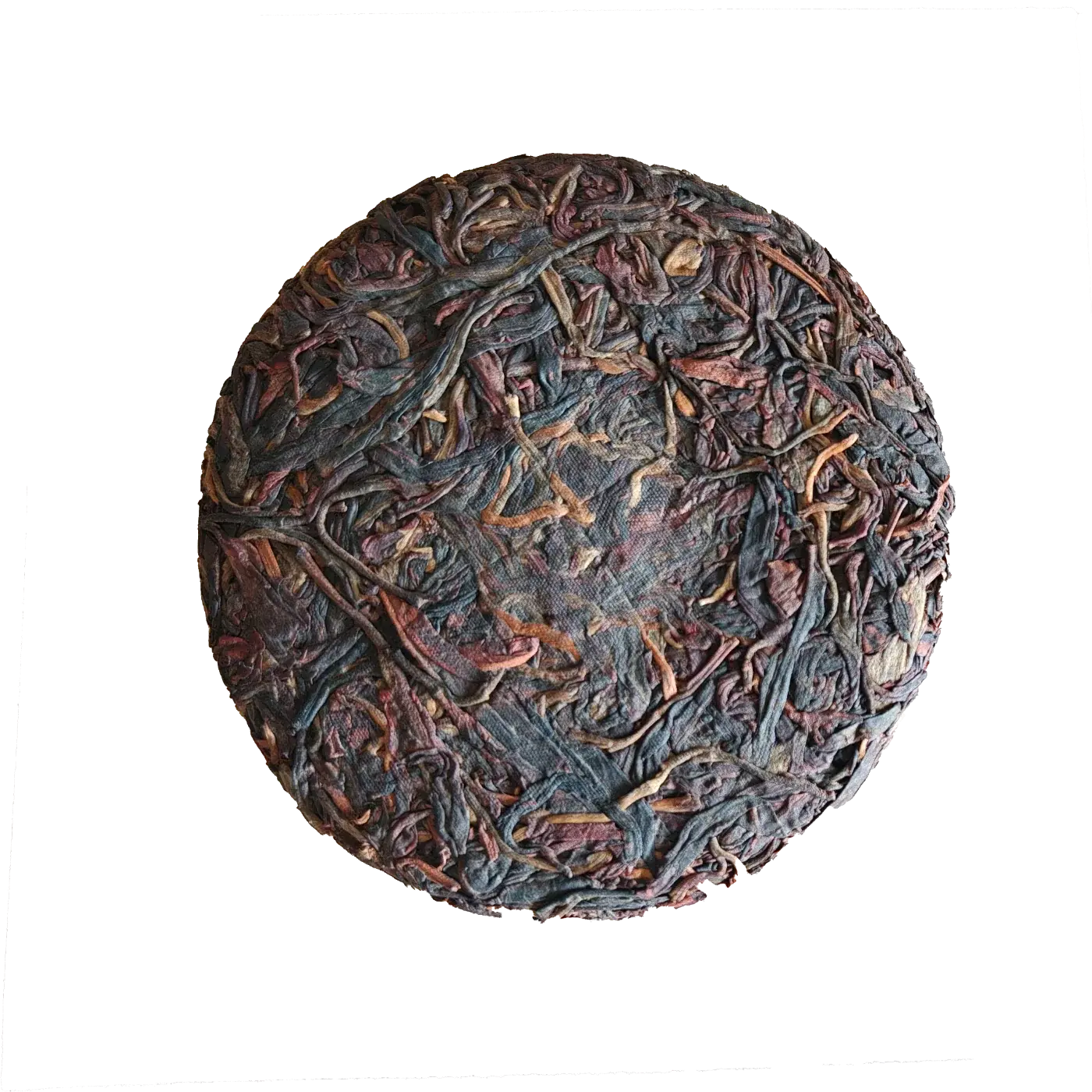
The mao cha is then blended, sometimes compressed into cakes, bricks, or small bowls (the tuo, cakes, and other shapes), and left to age. Compression slows oxidation and facilitates preservation — this practical reason is why caravanners of old transported tea in this form. Today, it is still compressed out of tradition and taste: the cake ages differently from loose leaf. For details, see our article on Pu'er production.
The ancient tea trees (gushu)
This is one of the most striking singularities of Pu'er. Where most teas in the world come from shrubs pruned in tight rows (so-called "terraced" plantations), some Pu'er comes from large, sometimes millennial, tea trees that grow in the heart of the forest. They are called gushu — literally "old trees." This is the whole difference between tea from ancient trees and plantation tea.
These trees, deeply rooted in rich forest soils, yield leaves of incomparable concentration and complexity. It is from these trees that our most unique teas come, such as the Wild Ancient Raw Pu'er or the Gushu FuTuo Gong Ting Bingdao.
Naturally very low in theine
This is a point that often surprises people: fermented Pu'er naturally contains very little theine. The long fermentation it undergoes degrades a large part of the theine (the caffeine in tea) present in the fresh leaf. The result: it is a tea that can be drunk from morning to night, without affecting sleep, and is suitable for both adults and children.
In Chinese tradition, Pu'er is pre-eminently the tea for after meals — appreciated for its digestive qualities for centuries. It is served after meats, fatty dishes, large feasts. It is a gesture of appeasement as much as a moment of pleasure.
One tea, two families: sheng and shou
The world of Pu'er is divided into two main families: Raw Pu'er (sheng) and Fermented Pu'er (shou). The difference between the two is fundamental, and we dedicate an entire article to raw or fermented Pu'er. In a few words: raw Pu'er is tea in its natural state, which evolves slowly with time; fermented Pu'er has undergone accelerated fermentation in the workshop, which immediately gives it its characteristic roundness and woody notes.
Both are remarkable. Both are enjoyed with pleasure. What distinguishes them is the path they take — and the one you choose depends on your tastes, your patience, and the cup you seek.
Frequently asked questions about Pu'er tea
What is Pu'er tea?
Pu'er (or pu'erh) is a post-fermented tea originating from Yunnan, in southwest China. It is the best-known of the dark teas: a slow microbial fermentation, which continues after production, allows it to improve with age, sometimes over several decades, like a fine wine.
What is the difference between raw (sheng) and fermented (shou) Pu'er?
Raw Pu'er (sheng) is tea in its natural state: it evolves slowly, in the air, over the years. Fermented Pu'er (shou) has undergone accelerated fermentation in the workshop, which immediately gives it its roundness, sweetness, and woody notes. Same Yunnan leaf, two different paths.
Does Pu'er tea contain theine?
Very little, especially fermented Pu'er: its long fermentation degrades a large part of the theine (the caffeine in tea) present in the fresh leaf. It is a tea that can be drunk from morning to night, including in the evening, without disturbing sleep.
Is Pu'er good for digestion?
Chinese tradition has, for centuries, made it the tea to drink after rich meals, and many find it gentle on the stomach. We refer to it as a traditional use, not a health promise: for any medical questions, consult your doctor.
How to prepare Pu'er tea?
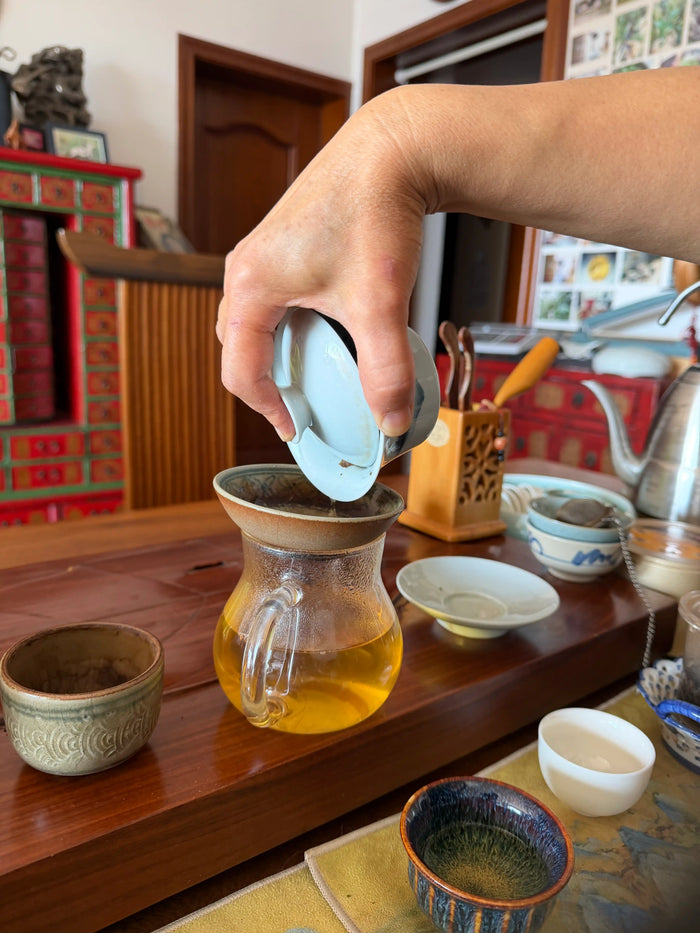
The ideal is to infuse many leaves in little water, with short and repeated infusions: this is the Gongfu Cha method. Count 5 to 7 g for 100-120 ml, very hot water (95-100 °C), a quick rinse, then infusions of a few seconds that are lengthened. Our guide on how to prepare Pu'er tea details everything.
To go further: all about Pu'er, article by article
This article is the entry point. Here, by theme, are all our Notebooks to explore Pu'er in depth.
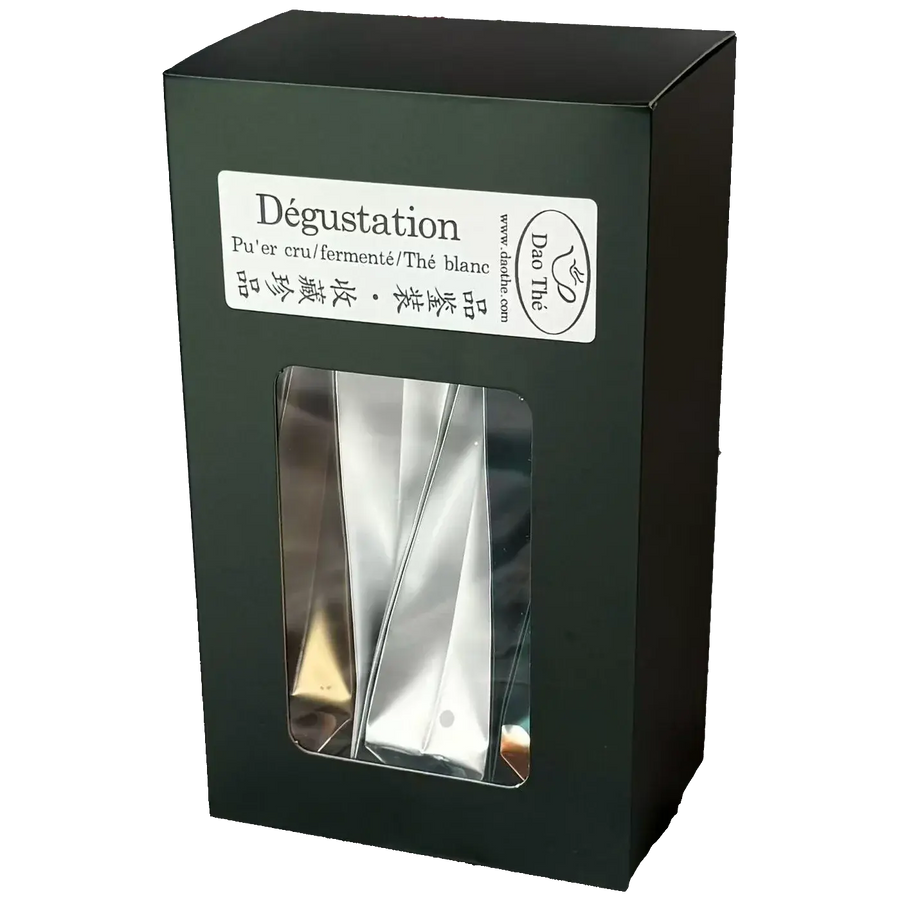
To begin your discovery, our Discovery Set brings together three Yunnan teas that cover the essential diversity — it's the gateway we recommend for those who want to taste before choosing.
Once you've chosen your tea, our guide How to brew Pu'er tea will guide you step by step through the brewing process.