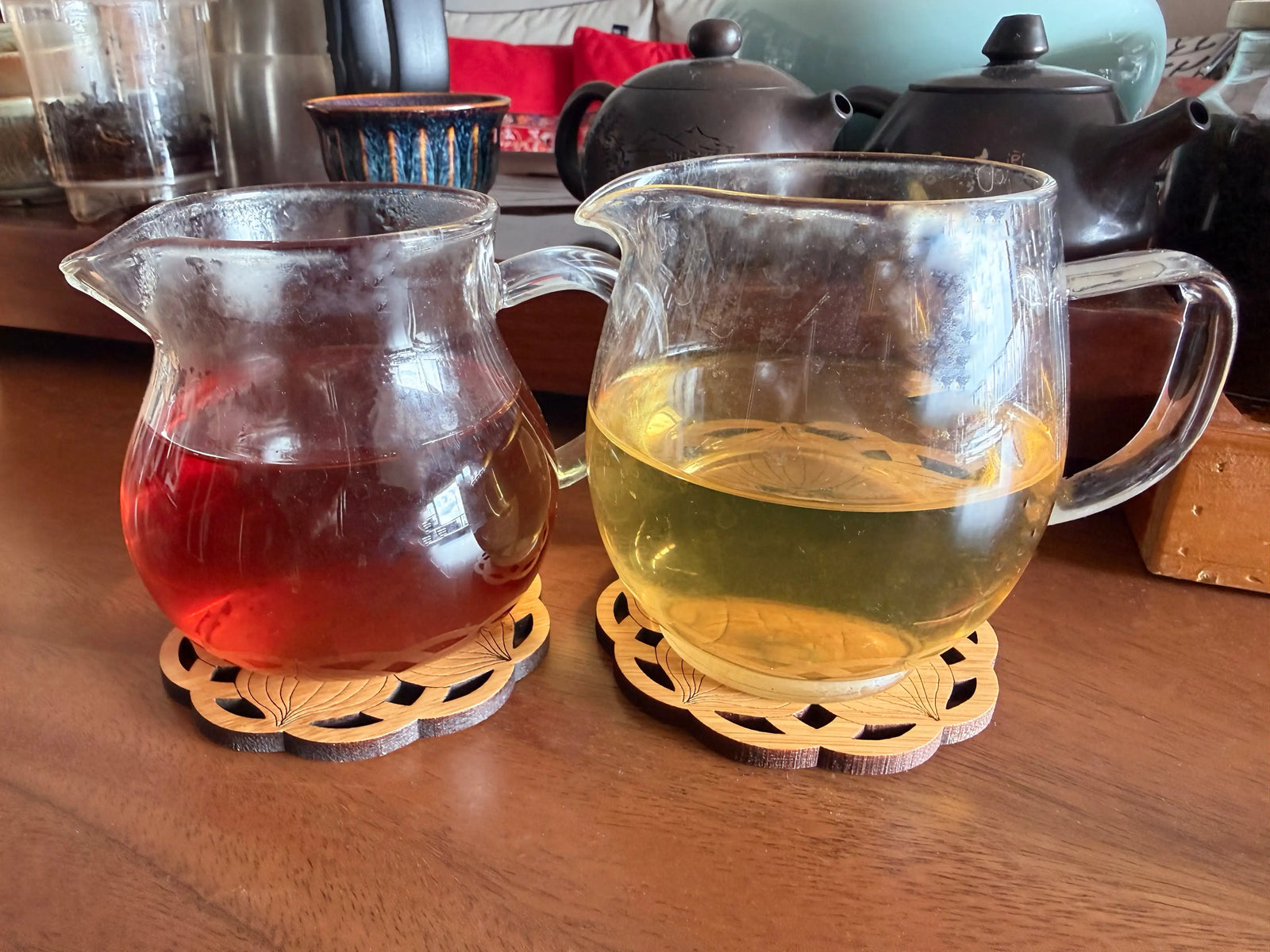
When you discover the world of Pu'er, a primary question quickly arises: fermented or raw? Sheng or shou? These are two profoundly different teas in terms of taste, production, and how they relate to time. Both are remarkable. Here's how to choose knowingly.
The fundamental difference
It all starts from the same tree and the same leaf. After picking and sun-drying, you get mao cha, the raw material. This is where the paths diverge.
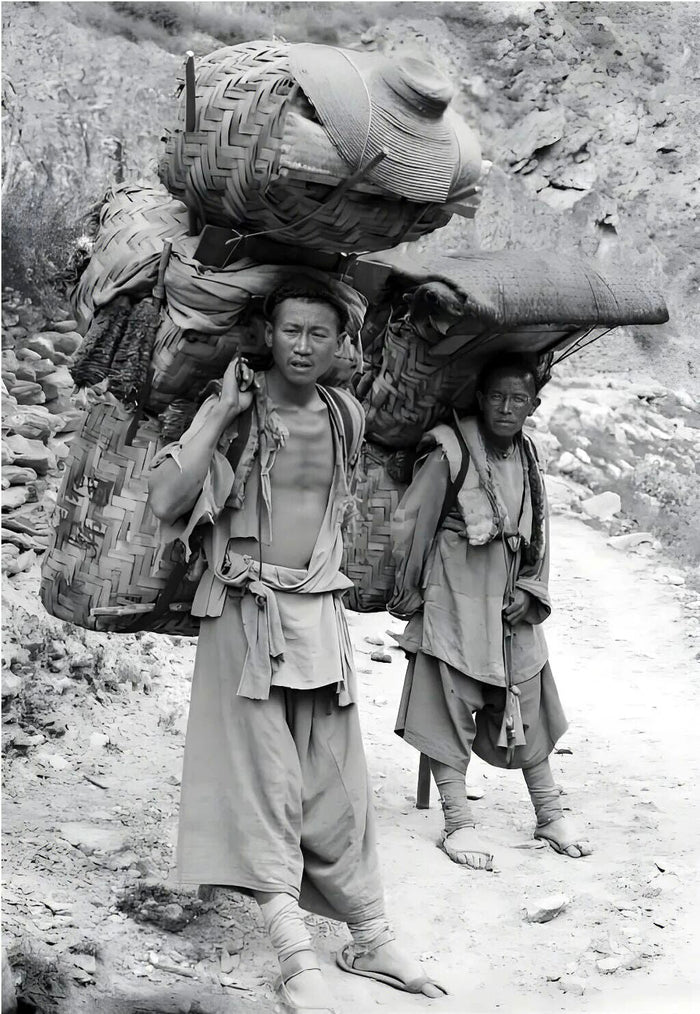
Raw Pu'er (sheng cha) is tea in its natural state. The mao cha is simply compressed into cakes and left to age. Its fermentation happens on its own, slowly, over the years. This is the original Pu'er, the one drunk by the caravanners of the Tea and Horse Road.
Fermented Pu'er (shou cha), sometimes called "cooked Pu'er," goes through an additional step: pile fermentation (wòduī), a process developed in 1973 at the Kunming factory to meet the demand of the Hong Kong market. The leaves are moistened, piled under tarps, and microorganisms accelerate the transformation process that, in raw Pu'er, takes decades. In a few weeks to a few months, you get a tea that is already mature, round, and smooth on the palate.

Two paths, one leaf
Raw Pu'er (sheng)
Natural fermentation
Slow aging (years, decades)
Lively, floral, astringent when young
Improves with time
Fermented Pu'er (shou)
Accelerated pile fermentation (wòduī)
Ready in a few weeks
Round, woody, velvety
Very low in theine
Raw Pu'er: a living tea
When young, raw Pu'er has character. It can be lively, astringent, floral, sometimes bitter—it's a tea that doesn't try to please immediately. It appeals to those who appreciate complexity and aren't afraid of a certain freshness on the palate.
But it's with time that it reveals its true nature. Over the years, its tannins soften, its roundness increases, its aromas evolve towards aged wood, dried date, sometimes soft leather or cold incense. A well-preserved twenty-year-old raw Pu'er is an experience in itself. It is this slow transformation—the residual enzymes and microorganisms at work in the leaf, season after season—that makes raw Pu'er a tea of patience and fascination. You can also follow this evolution: it's all in our article on aging and storing Pu'er.

Raw Pu'er from large, century-old trees (the famous gushu) are the most sought after. Their deep roots and the richness of forest soils produce leaves with a concentration and depth that plantation tea trees do not achieve. Our Ancient Wild Raw Pu'er comes from these trees—century-old tea trees from DaXueShan, the Great Snowy Mountain, in the Lincang prefecture.
Fermented Pu'er: immediate roundness
Fermented Pu'er is a tea with a completely different approach. From the first cup, it seduces with its sweetness. The liquor is dark, thick, velvety, without the slightest astringency. You can recognize woody, slightly earthy, sometimes sweet notes—a hint of ripe fruit or precious wood.
This is the ideal tea for those discovering Pu'er. No bitterness, no unpleasant surprises, no need to know the dosage down to the gram—it forgives almost everything and always gives something good. It is, without hesitation, the Pu'er we recommend for beginners.

Fermented Pu'er also naturally contains the least theine. The long fermentation degrades a large part of the original theine, making it, throughout China, the tea for all day and after meals. Our Organic Pu'er, composed exclusively of organic Gong Ting buds, is its most accomplished expression.
Handmade in Yunnan, from harvest to cake.
Which one to choose?
If this is your first Pu'er, we recommend the fermented. It is the most accessible, the most rounded, the most immediately enjoyable. It requires no particular experience or equipment.
If you already like Chinese or Japanese green teas, if you appreciate freshness and complexity, the raw will appeal to you. It requires a little more attention to preparation, but it amply rewards the effort.
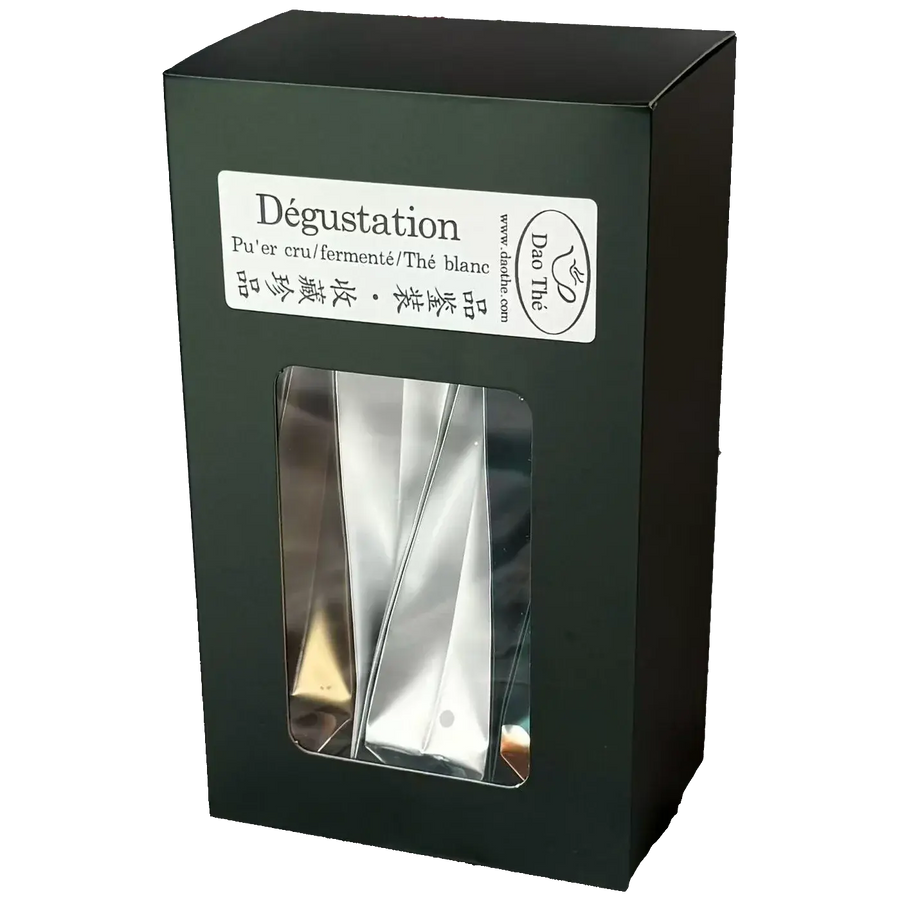
And if you're undecided? Our Discovery Box contains both—it's the best way to settle the question.
Summary
| Raw Pu'er (sheng) | Fermented Pu'er (shou) | |
|---|---|---|
| Taste | Lively, floral, complex | Round, woody, velvety |
| Theine | Moderate | Very low |
| Aging | Improves over decades | Ready to drink, also improves |
| For whom | Tea lovers, curious | Beginners and daily drinkers |
| Temperature | 90–95 °C | 100 °C |
Frequently asked questions
What is the difference between sheng Pu'er and shou Pu'er?
Sheng (raw) is Pu'er in its natural state: it ferments slowly, in the air, over the years, and improves like a fine wine. Shou (cooked, or fermented) has undergone an accelerated pile fermentation, wo dui, invented in 1973: it is round, sweet, and without bitterness from its youth. Same Yunnan leaf, two opposite characters.
How long does it take for raw Pu'er to truly improve?
There is no magic threshold. The first changes are noticeable after five to seven years: floral and vegetal aromas give way to more woody notes, and tannins soften. Around fifteen to twenty years, a well-preserved sheng enters another dimension—roundness, depth, length on the palate. The transformation continues beyond, with no known limit, provided that storage is clean, protected from odors, and at reasonable humidity.
Does fermented Pu'er also age?
Yes, even though it is ready to drink upon production. A few years of rest after fermentation allow the aromas to blend and the last earthy notes to fade. A good shou gains in velvety smoothness and roundness over time, but the transformation is less spectacular than that of sheng—the accelerated fermentation has already done much of the work.
Which one to choose if you are sensitive to theine?
Fermented, without hesitation. The long fermentation naturally degrades most of the theine contained in the original leaf. In practice, you can drink fermented Pu'er from morning to night without affecting sleep—this is what is done in the mountains of Yunnan, where the same teapot accompanies the entire day.
To go further, our guide How to prepare Pu'er tea accompanies you step-by-step in brewing, no matter which method you choose.
If you are just discovering this tea family, start with What is Pu'er tea? to understand its origins and terroirs.
And to discover what Chinese tradition attributes to this tea, our article Benefits of Pu'er tea tells this long history.