Bingdao Gushu Raw Pu'er
✦ Naturally low in caffeine, enjoyed from morning to night
€320 / 100 g.
Naturally low in caffeine. Ancient Bingdao trees, hand-pressed.
Our Antique raw Pu'er is naturally low in caffeine. Slowly aged, it has let go of the stimulation usually attributed to tea: it can be drunk in the evening, at the end of a meal, or at any hour. Born of old tea trees we selected at Bingdao, in Mengku, it is a tea you can give, and one you can keep for years.
Fresh vegetal notes, white flowers, a mineral touch on opening. A lively mouth, citrus, stone fruit, the light astringency characteristic of sheng. A long, persistent finish.
Why this tea
Pu'er ages over a long time. This gradual transformation removes the great majority of the caffeine, and what remains no longer resembles the stimulation of a green or black tea: the cup is soothing, drinkable at any hour, including before sleep or after a hearty meal.
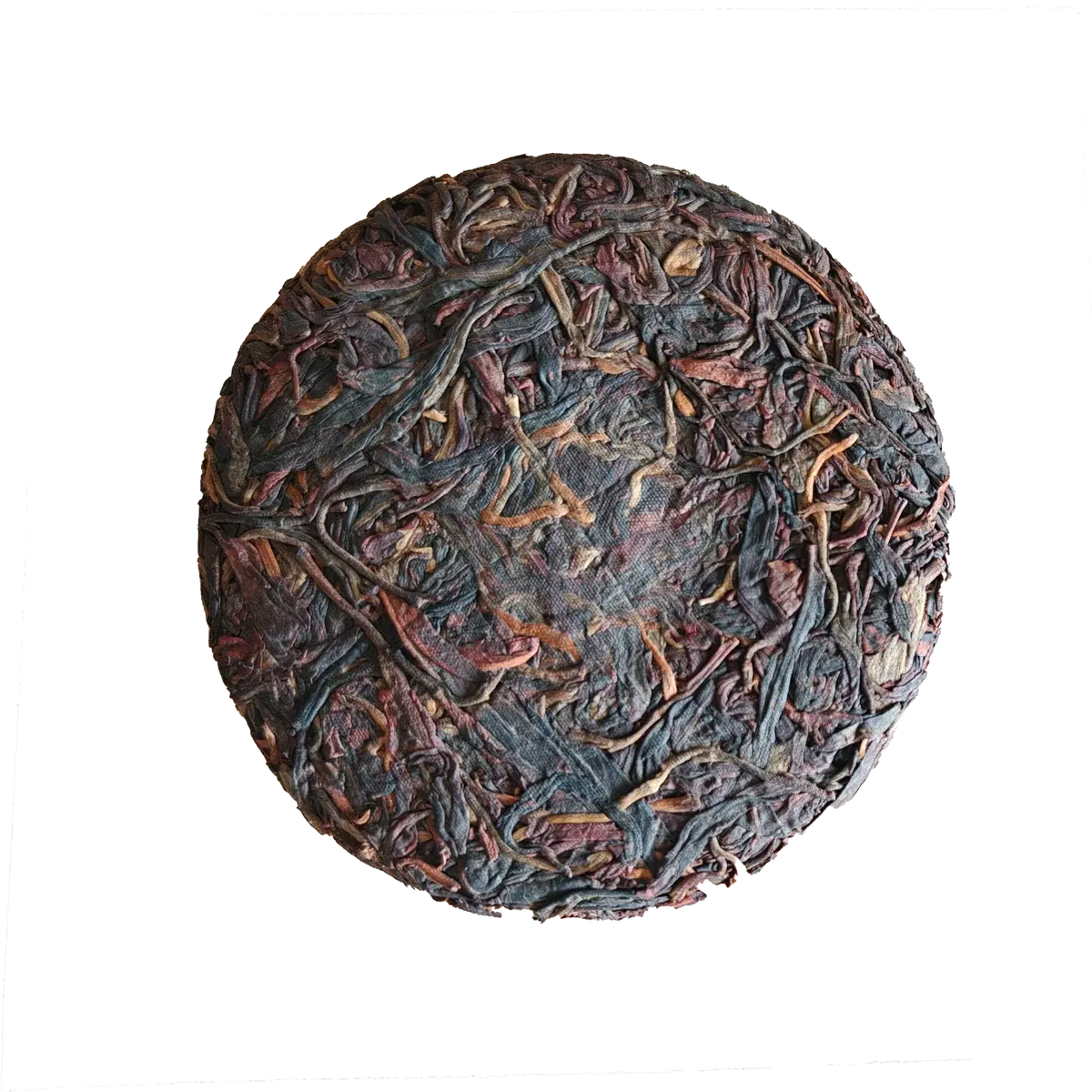
Each spring, we harvest ourselves in the mountains of Yunnan, in our workshop where we work the leaf from picking to cake. This cake comes from ancient Bingdao trees, in Mengku, tea trees that grow slowly at altitude, without chemical fertilisers or pesticides, whose leaves concentrate what decades of growth have had the time to elaborate. Each cake is hand-pressed by the traditional method, then wrapped in parchment.
In Chinese tradition, raw Pu'er is associated with inner freshness. Enjoyed after meals, it is reputed, in that tradition, for its link to the liver and for the clarity it brings to digestion.
Origin and terroir
Bingdao is one of the rarest terroirs of Mengku, in Lincang. The trees from which this tea comes grow at altitude, far from intensive cultivation. Their age — decades, sometimes more — gives the leaves a depth that recent plantations cannot reproduce. The slowness of growth, the high-altitude soil, the air of these mountains: all of it is found again in the cup, in the minerality, in the floral notes, in that finish that will not let go.
Preparation
Water at 95–100 °C. In a classic teapot, count 5 g per litre. In a gaiwan for the gongfu method, increase the quantity slightly and steep 10 to 20 seconds, repeating many times: each round reveals a different facet of the tea. Tease the cake apart with a tea needle or your fingers to take what you need, without breaking it.
A single portion can be re-infused throughout the day: simply place the leaves in a tea ball and re-infuse at will until the evening.
Storage
This raw Pu'er ages and improves over the years, like a fine vintage. Keep it away from humidity, strong odours and direct light, in a container that breathes, above all not airtight. A cake bought today will be different in five years, and often better.
Tasting notes
Fresh vegetal notes, white flowers, a mineral touch on opening. A lively mouth, citrus, stone fruit, the light astringency characteristic of sheng. A long, persistent finish that promises a fine evolution with age.
Characteristics
| Type | Raw Pu'er (Sheng Cha) |
| Terroir | Bingdao, Mengku, Yunnan |
| Harvest | Spring |
| Form | Hand-pressed cake |
| Weight | 100 g |
To go further
Three reads to know this tea better and prepare it as we do.
- What is Pu'er tea? — origins, terroirs, traditional virtues.
- Fermented Pu'er or raw Pu'er — two families, two characters, how to choose.
- How to prepare Pu'er tea — gaiwan, teapot, tea ball, thermos.
Detailed characteristics
| Terroir | Village of Bingdao, Mengku region, Yunnan, ancient tea trees |
| Altitude | 2,000 to 2,200 metres |
| Type | Sheng (raw) |
| Grade | Gushu (ancient tea trees, over a century old) |
| Harvest | Spring harvest, recently pressed |
| Aromatic profile | Floral, honey, deep |
| Ageing potential | Several decades, made for the cellar |
| Sourcing | Direct from the Bingdao grower, ancient tea trees (gushu), hand-harvested |
Who it's for
For collectors and enthusiasts who want a cellar piece.
A 100-gram hand-pressed cake, to be kept in good storage conditions (18 to 25 degrees, 60 to 75 percent humidity).
Gains in complexity year after year.
To go further
Discover Ageing your Pu'er and Gushu: what is an ancient-tree tea on our blog.

Tea pressed by hand, as it was a thousand years ago
Qiao has been making tea for thirty years. By hand, following the old ways, she presses each cake herself on a stone mill, a craft handed down for more than a thousand years and today listed as intangible cultural heritage.
Our tea trees, some several centuries old, grow above 1,800 metres: we call them the "old immortals." Their leaves are fixed by hand in great woks heated over a wood fire, then rolled. Six months a year, we are there, at every step.